
Read the round in the correct order
A selected stake, a potential collection and a completed result are three different states. The cash-out control concludes the round; it does not initiate a bank transfer.
Before
Find the wager and mode. These are inputs, not account income.
During
Read the displayed multiplier as conditional on a completed collection.
After
Reconcile the amount with the round history; do not infer settlement from animation alone.
A round from start to finish
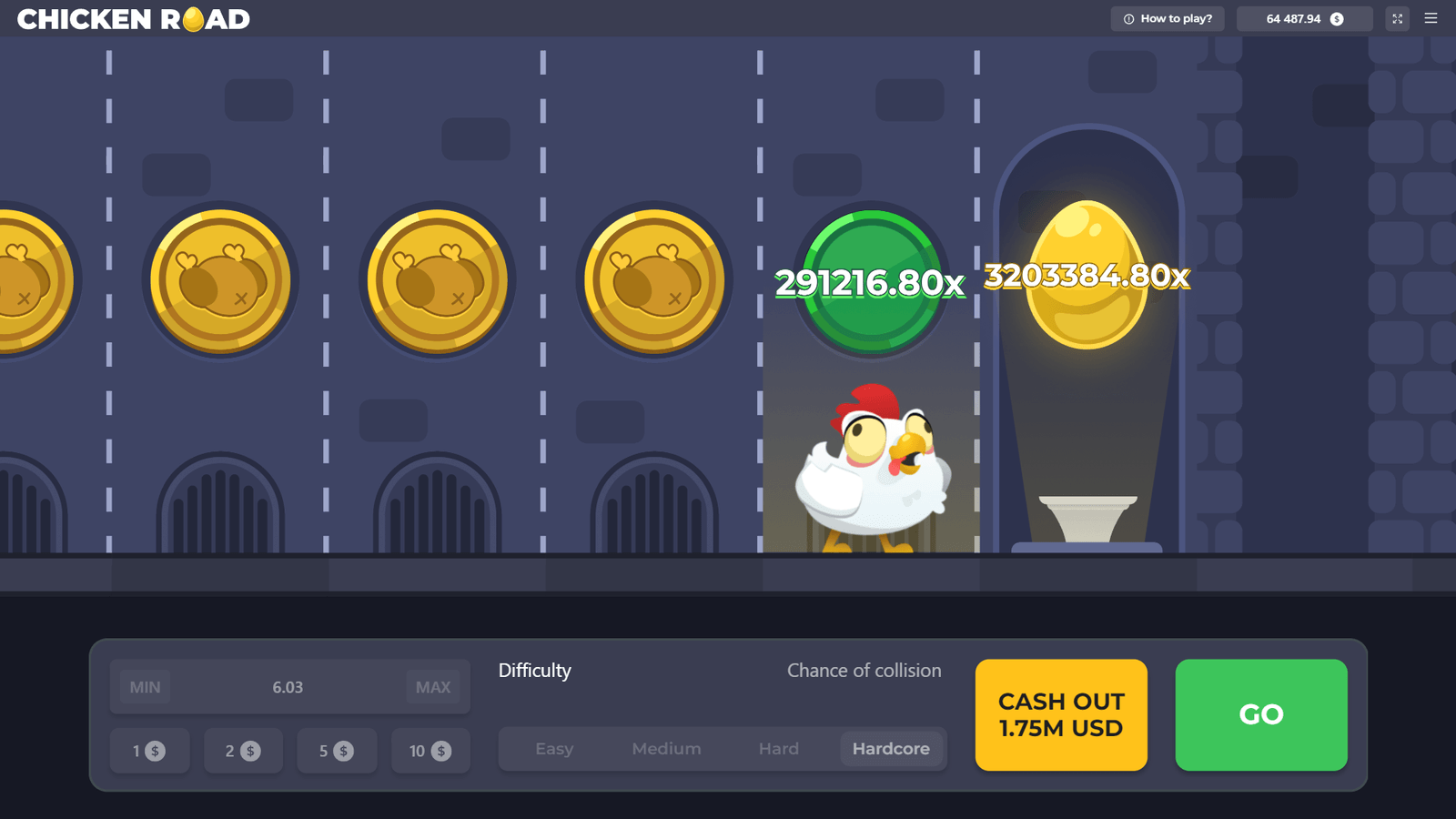
Verify the mode and game identity
Identify the edition and the studio, then inspect the session type and account information to determine whether you are using cash or virtual credits. A displayed quantity of 1,000 units alone does not establish that the session is a demonstration.
Choose the amount committed
A stake commits part of the wallet to an individual round, not the entire amount in your account. Consult the rules of that game session for the acceptable wager interval instead of relying on another operator's advertised minimum.
Read difficulty information
According to InOut's information for its initial release, the four settings are Easy, Medium, Hard and Hardcore. Compare their rules using virtual currency. None of those labels provides an assurance that the next crossing will succeed.
Inspect the current settlement value
Read the settlement value that becomes available after progress. You can finish the round at that point, or choose another crossing and thereby leave the active wager exposed to failure.
Check the final result
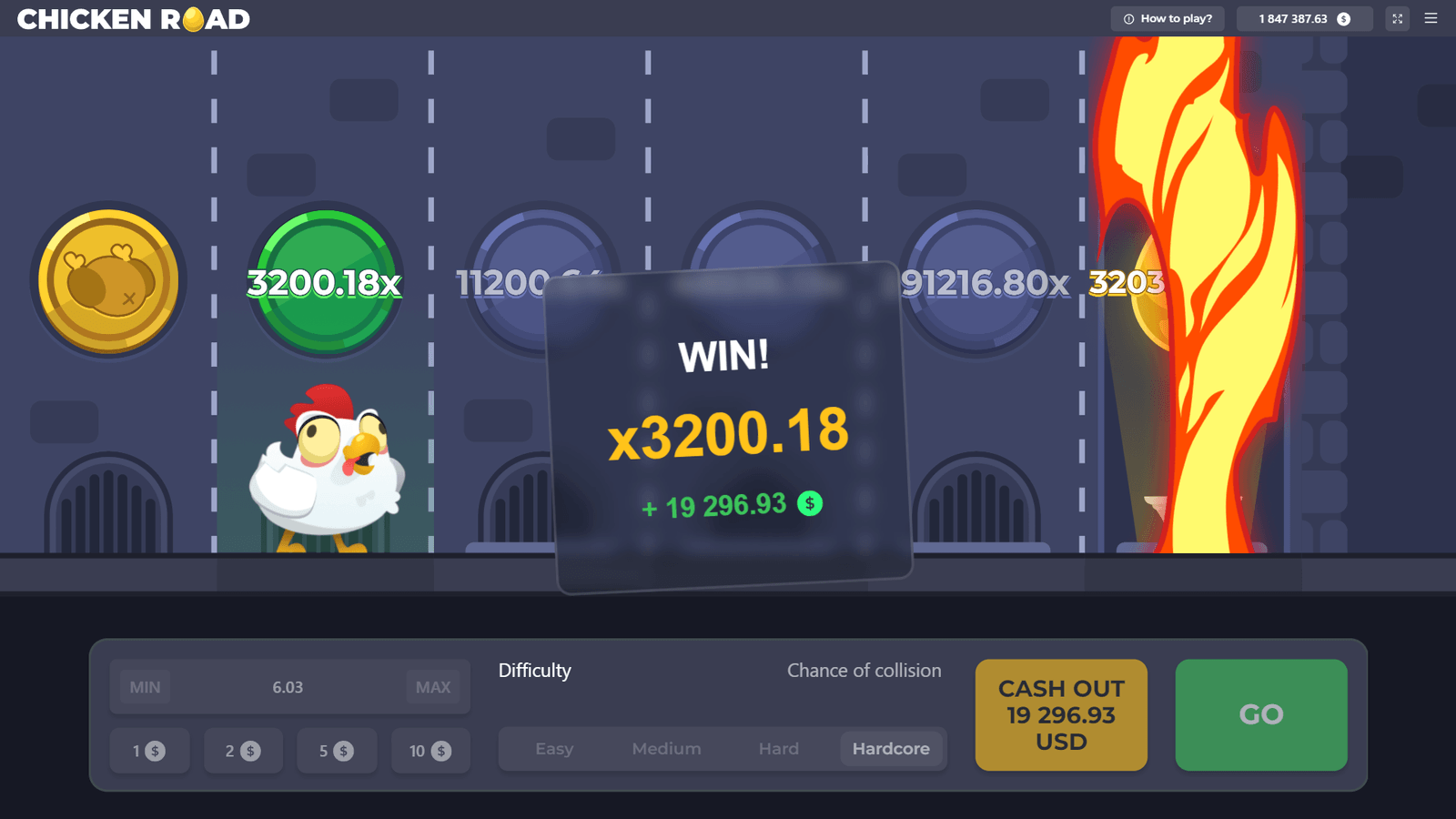
Successful collection completes the event; reaching a failing move forfeits the amount wagered. Confirm the recorded result in history and the updated wallet balance rather than relying entirely on the animated road.
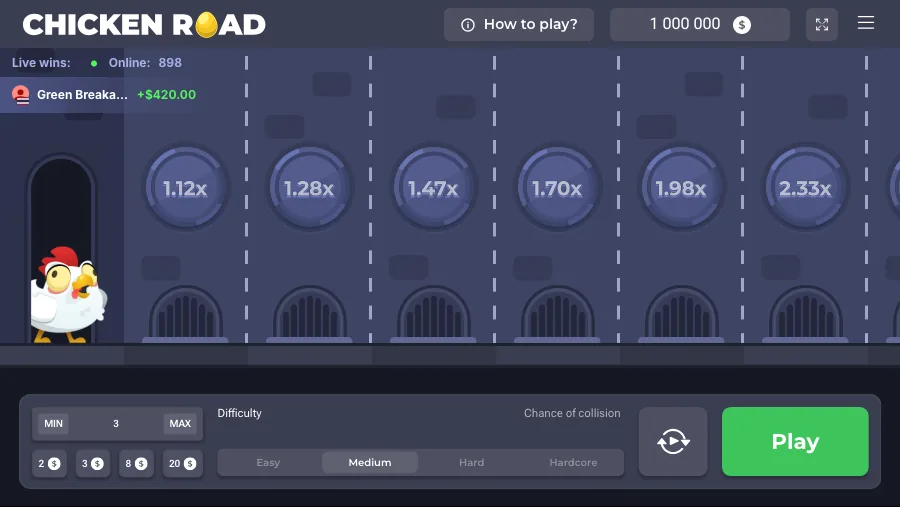
Six interface values and controls
| Interface item | What it represents | Different from |
|---|---|---|
| Available account funds | Units currently available to use | The amount committed to an individual event |
| Wager | Funds committed to this particular round | An assured settlement |
| Difficulty | Chosen risk mode | A guarantee based on ability |
| Multiplier | The factor multiplied by the wager | The net gain after deducting the wager |
| Cash out | Settle the round at the available amount | An external transfer request |
| History / round ID | Reference used to confirm a result | Evidence of a future outcome |
When you cannot identify a button, stop and consult the game's information panel. Different device layouts, versions and languages can rearrange the controls. Understanding their functions is more useful than remembering the location of a coloured shape from an example image.

Calculating a sample 10-unit round
Take a virtual round with a 10-unit wager and an available multiplier of 1.50×. If collection succeeds at that value, the wallet receives 15 in total. Because 10 came from the original wager, the net gain attributable to the round amounts to five units (+5).
Alternatively, proceeding to a failing move would produce a −10-unit result. The opportunity to collect 15 units at an earlier position did not credit those units separately into the wallet. Do not add earlier displayed multipliers together as though each intermediate stage had already generated an independent payment.
This example demonstrates the calculation; it does not assert that 1.50× occurs at any particular position or mode. You can calculate other hypothetical amounts without making up the probability of reaching each multiplier. Further reading: calculator.
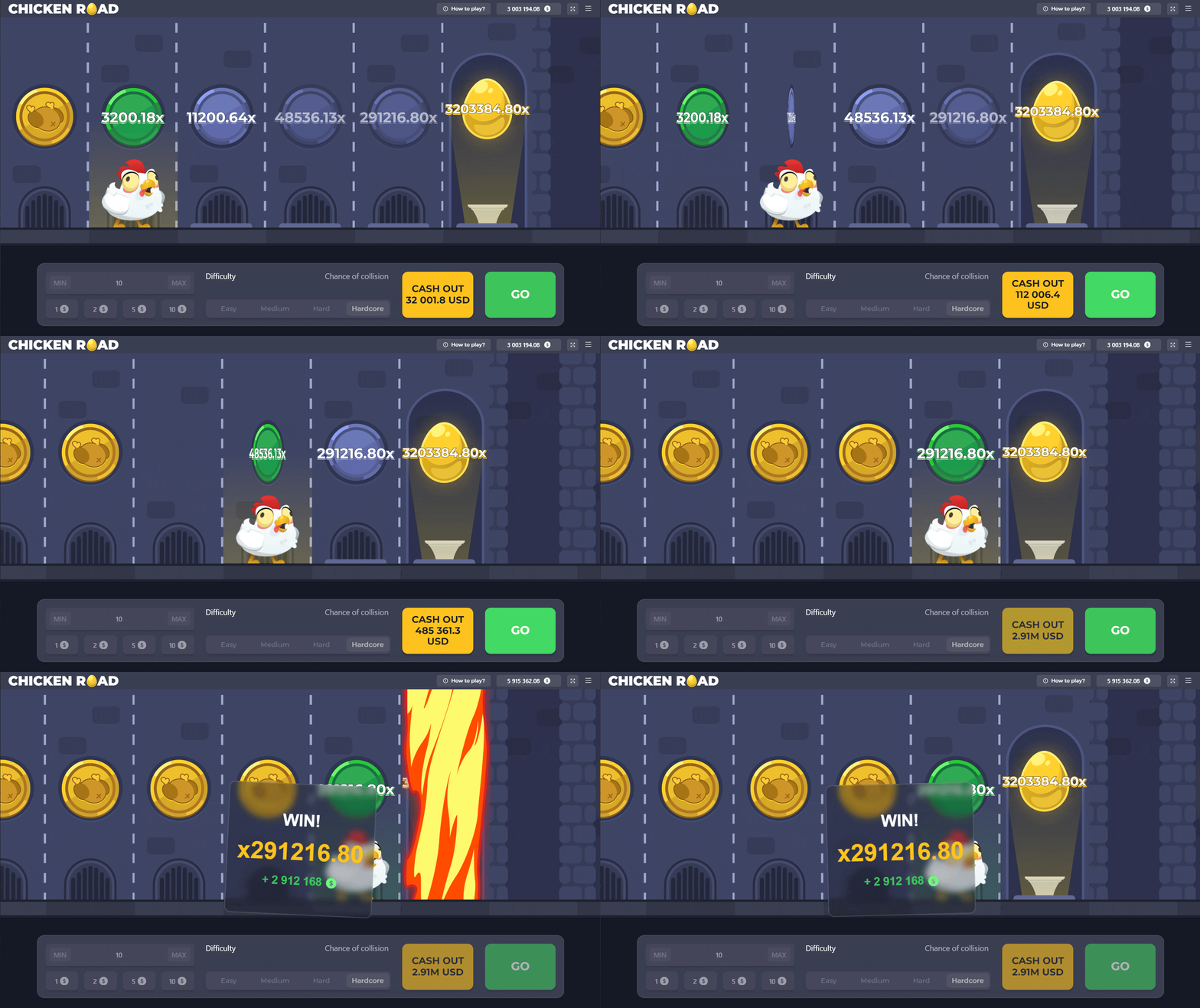
Risk modes and payout ceilings
Compare the prospect of a larger collection with the possibility of failing before that amount becomes available. The lane count, multiplier sequence and permitted limits need not match across modes. Use the edition's current help screen to establish the actual parameters.
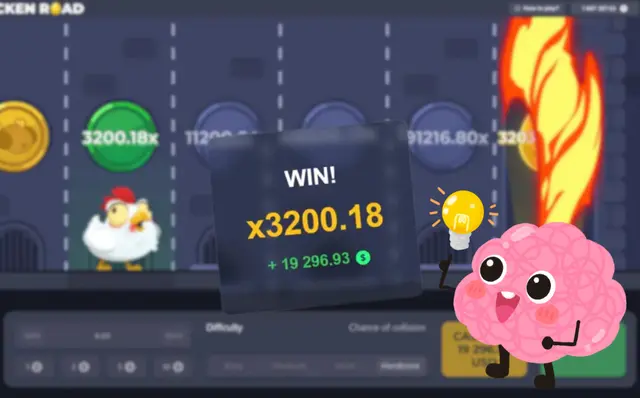
The permitted wagers, payout ceiling and lane count can depend on the product edition, how the operator has configured it and account-level restrictions. Accordingly, there is no single universal specification for all sessions. Treat an artwork claim such as ×1000 as marketing rather than an entitlement to that payout.
A rhythm of taps, the timing of visible traffic or a particular hour of the day does not demonstrate a dependable advantage. Unlike a pure test of reaction time, the wagering software involves chance-based outcomes, so fast or skillful inputs cannot guarantee survival.
What to do after an interruption
If a connection fails in mid-round, establish whether the system received the last input and what settlement it saved. Additional clicks do not reliably resolve those uncertainties. Reconnect, consult account history and record the game name, round reference, time and relevant screen information.
Raise paid-round disputes via the casino's authenticated help service, without disclosing passwords or temporary security codes. A missing round requires its round identifier, whereas a cashier enquiry concerns a payment transaction. The separate payment guide explains how to identify the relevant evidence for each problem. Further reading: payments and troubleshooting.
Learn this process in a practice session before attempting paid play. Mobile users can consult the browser and screen-rotation guidance for ways to make controls easier to read. Further reading: free demo; browser and screen-orientation guidance.
Follow a round as a sequence of decisions
A round has a start, a period during which the collection value may change, and a settlement. The value displayed while a round is active is not necessarily what the account ultimately receives. Understanding that distinction makes it easier to interpret both success and loss without treating the moving character as a timing signal.
| State | Possible collection | Net accounting |
|---|---|---|
| Started | Not yet collected | 10 units committed |
| Collection completes at 1.5× | 15 units | +5 units |
| Collection completes at 2× | 20 units | +10 units |
| Round fails before collection | 0 units | −10 units |
After an interruption
Mark the items you have confirmed. This checklist stays in your browser and does not submit data.
These states explain the accounting only. They do not specify the chance of reaching a multiplier; a later collection target cannot guarantee a better financial outcome.
The anatomy of a round, without guessing the next move
A round can be understood as a finite sequence of states. Before commitment, the displayed amount is an input; during activity, the collection value is conditional; after settlement, the result becomes an accounting entry. Confusing these states is a common source of misunderstanding, especially when the animation and wallet update at different times.
Suppose a hypothetical round commits 8 units. A completed collection at 1.25× returns 10 units, of which only 2 are net gain. If a later round commits the same amount and fails, the two-round ledger is 10 returned against 16 committed, or a net loss of 6. Looking only at the successful round would hide that difference. The example does not assign any probability to either result.
- Before
Configuration
The user sees the selected amount and mode. No result can be inferred from the configuration.
- Start
Commitment
The round starts with the accepted stake. It may be recorded even if the display briefly stalls.
- Active
Conditional collection
The current factor represents the amount that would be returned if collection completes at that point.
- End
Settled result
The result becomes a credit or a loss in the round history.
- After
Reconciliation
A separate account transaction exists only where the account’s wallet and payment service support it.
Diagnose the last known state
Identify the actual state, not the animation.
The amount field has changed
A changed input is not proof of a new round.
Next check: Confirm whether the charge or round identifier exists.
The animation has stopped
A frozen image does not establish whether the service completed the transaction.
Next check: Review the recorded history before sending more inputs.
The wallet shows a credit
The game has recorded value within the casino account; a bank transfer is not implied.
Next check: Look at the cashier separately if a transfer is involved.
Follow two possible endings of one illustrative round
The fixed example commits 10 units and shows a conditional collection factor of 1.5×. The two endings are alternatives, not consecutive events or predicted results.
- 1
Configure
Example wager: 10 units. No stake is assumed committed merely because it appears in the input.
Result or check: Potential outcome is unknown.
- 2
Commit
The example starts and the 10 units are committed to the round.
Result or check: Recorded stake: 10 units.
- 3
Inspect conditional amount
At an illustrative 1.5×, the possible gross amount is 15 units.
Result or check: The display is conditional, not a confirmed credit.
- 4
Ending A: successful collection
If the displayed amount is successfully settled, gross collection is 15 units.
Result or check: Net change: 15 − 10 = +5 units.
- 5
Ending B: unsuccessful round
Alternatively, if the round fails before settlement, there is no return.
Result or check: Net change: 0 − 10 = −10 units. No probability is assumed.
- 6
Reconcile
Use the actual round identifier and ledger, not the visual animation, to identify the ending.
Result or check: The resulting ledger entry is either the completed settlement or the recorded loss.
Frequently asked questions
5 / FAQNo questions found for this search. Enter a different search term.
How does a failed crossing settle?
A failed crossing ends the current round with the wager forfeited. Intermediate multipliers have no independent monetary value before an accepted collection settles the event.
How is a collection different from a withdrawal?
They describe different events. A collection finishes the in-game round; transferring eligible funds to an external payment method requires the operator's cashier.
Which four difficulty options are documented?
The developer identifies Easy, Medium, Hard and Hardcore as the four original modes. Consult the particular game panel for their parameters rather than assuming the later version handles them identically.
Can timing an input guarantee success?
No verified evidence establishes that the rhythm of inputs or animated traffic provides a method of ensuring a successful outcome.
Which evidence identifies a disputed round?
Save the operator and title, the round reference, the approximate time and a relevant screenshot. Use verified account support without sharing temporary login codes or passwords.